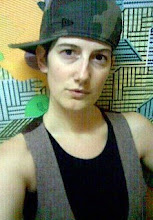
It’s nothing really. It’s just mineral and proteins strung together to create a tangible strand. Hair. We all got it – some more than others, and I was in this category of flowing tresses – tied up, braided, pushed to the side with a clip, pulled back in a ponytail under a hat…the list goes on. A couple of weeks ago I cut it off.
It was a Friday night; I just got off work and was walking to a friend’s apartment to watch the debate. In my mind, my own type of debate ensued: how much to chop? How do I style it; I have never been good at being consistent – except maybe when eating peas, corn and parmesan for dinner on a very regular schedule – so I found myself scouring each block. There were barbershops with the classic red, white and blue spindle in its window, there were nail salons that also gave cuts; and then there was this little spot located about a block a way from my friend. A slim woman, dressed head to toe in black, a gold belt slung loosely around her waist, stood smoking a cigarette outside of the small storefront. “Are you still offering appointments,” I asked. She leaked out a “yes” between the blue smoke rising from her lips, and waved her hand for me to go inside and set up a time slot at the front desk.
I guess I should’ve known from the door. Literally. Walking through the door put me smack into the end of a tunnel-like shop that was decorated in mauve and gold, glass tables and techno music; men strewn on either side of the counter who donned slick-back hair and limited buttoned button-up shirts. Chest hair and smiles. He gave me the last appointment of the day. I would be back in 20 minutes. Slowly, but giddy about the new transformation that was sure to ensue, I buzzed my friend and updated her on the evening’s schedule. Per usual, my need to be chaotically organized lends way to overriding impulses, and per usual, good people in my life make attempts to shake me from my Piscean dream-like state. She lay there, her own hair tussled and pulled high on top of her head, and dialed the number of her trusted salon in the Village – she added me to her appointment the next day and hung up. I had the option of waiting a little over 12 hours to sit in front of a mirror, under the hands of professionals who are like comic book drawers creating this week’s episode of the Transformers – a breed that is more than meets the eye.
I paced, I checked my phone, went pee, washed my hands, applied chapstick, paced again. Finally, I decided;I was gonna go that night. Shrugging, my friend and I made our way down the crowded block to the salon.
Never again would I feel those exact stands of hair being tugged and scrubbed in that forceful, yet pleasurable way that only the shampooers at a salon can elicit. Staring at the ceiling I noticed the gold belt walk by a couple of times; she would be my stylist. Hair wrapped in a towel I was asked if wanted a glass of wine, of which came in a low crystal-cut baller glass, kind of like the ones you scoop from an estate sale or your grammy’s attic, or perhaps in that one cheesy Days Inn hotel that I stayed in after blowing a tire in Virginia, driving between Florida and Pennsylvania long over a year and a half ago. I liked it, and I swigged easy from its rim.
“How would you like it styled,” she asked me, dancing a bit to the music blaring out of a speaker somewhere above us. “I want it really short, but with a longer, sort of, swoop in the front – something I could perhaps tuck behind my ear, but still have the feeling of next to nothing on the back of my head.” She nodded like she knew, but 20 minutes later, my cheeks pink from the wine, I realized that she was giving me the old lady bob. “Um, I was hoping it would be short – like really, really short.” And she looked at me, paused, shifted her weight and said, “But you are a woman; that is a boy cut.”
I think I laughed.
“Yes, make it look like a boy cut then.”
She made several attempts – like Edward Scissorhands, hair dropped all around us, but she just couldn’t get it close to the head. Perhaps her own long hair kept her from seeing the beauty in being flexible, breaking down the barriers of what it means to be a woman, a beautiful woman, in this society. How does length of hair become genderized and normalized and perpetuated by those who think they are strong enough to smash through the bullshit? Well, it was that night. Her scissors were like the blades of the patriarch – they created me from the mold that sat on top of my head. I was restless; she looked tired from fighting the challenge in front of her. She undraped me, and sent me on my way.
Still, that night, I felt pretty darn good; I mean, my ‘do WAS finally off of my neck, and I WAS wearing a flannel, jeans, and a silly grin. A group of us went out, and I have to admit that I felt like I wanted to be wanted, and I wanted to want all in my path. It was like an internal game of tug-o-war where I didn’t want to be demure, but I also didn’t want to ogle and demand the women in our group to be protected by me. The stew of my analysis was already beginning to bubble on my stove. The next day, hung-over, and planted on a brown leather stool, I was getting it recut. I was once again asked “how would like it to be styled, and seeing as how my stylist and I already established that we were both gay, I blurted out, “Make it dykey, make it edgy.” Why couldn’t’ I say this to the woman who refused to get my cut closer than a bowl/bob cut? How does my internalized fear of being myself creep in to some situations, and not others? At the end of that session, hairs were super short -- an almost orgasmic feeling of freedom rising from my body as I ran my fingers through the next-to-nothing length.
Here’s the thing about making change, it can take minutes, hours, days, weeks, months, years, but it’s there. Real and tangible – and people love to comment on their own inhibitions based on your act of alteration. “Oh my gawd, I, like totally love your hair; I was going to do it too, but I just feel so connected to this length.” Or, “You are so brave.” Or, “Can you send a picture where you are smiling?” (Ok, that one was because I was only taking pictures of myself where I had that pouty model look of desperation/uber sexy). For the most part, I nod and smile, and for the first couple of days I came up with witty responds, such as “What? You mean my hair looks shorter without the wig?” I like that place – somewhere between obnoxious confidence and unnoticeable ego. It’s a slight line – ebbing and flowing, my radar teeters.
There are a number of things that happened to me in the last 18 months, one of which was the realization that I easily fall in love with people who may be a great connection, but of whom I may be better suited to ask the question, “do I want to be with them, or do I want to be them?” Again, a fine line that takes courage to disentangle. Part of that realization was that perhaps I am sort of 60 - 40 on masculine versus feminine identity. Funny how showing neck and ear skin can bump that number higher on days when it matches both my outer fashion, and my inner style where with my legs casually apart, I watch a mysteriously stunning woman from across the room – eyebrows furrowed, she reads and ponders, back straight, chest out, just absolutely beautiful in all that she exudes, and I think how I am not like her. I am not that creature. Yet, having the privilege to move through my day and recognize that I can ebb and flow is a gift, and I know that. I know that I look exactly who I feel like: a dykey, edgy woman who is comfortable in a dress, but only if I am wearing high-top Chucks, and who would rather play Scrabble over football, eat salad instead of a steak, and who simply cannot stop flirting and strutting like the men in black and white films who wore fancy hats and a boyish grin.
It’s nothing really. It’s just a haircut. But it feels like another layer of my cocoon being stripped away, closer and closer to a center in which will metamorphosis into a butterfly.
Monday, October 20, 2008
Tuesday, October 7, 2008
All gender restrooms are where it's at.
A group of cohorts and I are working on creating an all-gender restroom at Columbia University's School of Social Work, where I am in my second year of graduate school. Of the 11 floors, there are no multi-stall, all-gender restroom where people can feel safe. Some may argue that the single stall facilities should be adequate enough, but how marginalizing is it to have to hide one's self away if one simply wants to be themselves, and pee in peace? Breaking down the boundaries of what a person has to look like to use a woman or man's restroom is something that should be smashed.


Saturday, September 20, 2008
Saturday, September 6, 2008
Gender manifestations: not on the binary
What does it really mean to act like a man, or to act like a woman? Are we constantly adopting to gender expectations that society places upon our bodies, voice, mannerism, clothing and relational connections, or is it an innate persona that shines through based on the anatomy that we have between our legs. For most, it is that reasoning. For others, the binary is blasted out of the water through example and reasoning in which exemplify the disillusion and unrealistic commands of our world; people are not THIS or THAT, instead individuals adopt their own perceptions and lie on a continuum of manifestations that is constantly evolving.
The Marshall School of Business, located within the University of Southern California, found interesting resultsfrom a research study looking at the ways people change their gender expression during job interviews to appear either more masculine if presenting as a biological woman, or more feminine if presenting as a biological male.
“In the study, women who were motivated to make a positive impression, perhaps in an effort to refute the stereotype that they are weak or ineffective negotiators, advocated more strongly for their own interests. In contrast, men who were motivated to make a positive impression, perhaps in an effort to refute the stereotype that they are overly aggressive, yielded to the demands of the other side.”
The result of the study: men take an economic hit, and women take a relationship hit. Their recommendation, “Our recommendation is that the more negotiators of both sexes are conscious of dynamics affecting negotiation, the more planning or practicing they can and should do.”
The real result: Sexism and gender marginalization are still very real in the society’s workplace. What’s more, it appears that people, in general, operate in a dualistic fashion where the complete opposite is acted upon. Perhaps we all need some lessons on the continuum – find understanding and acceptance in the grey area.
The Marshall School of Business, located within the University of Southern California, found interesting resultsfrom a research study looking at the ways people change their gender expression during job interviews to appear either more masculine if presenting as a biological woman, or more feminine if presenting as a biological male.
“In the study, women who were motivated to make a positive impression, perhaps in an effort to refute the stereotype that they are weak or ineffective negotiators, advocated more strongly for their own interests. In contrast, men who were motivated to make a positive impression, perhaps in an effort to refute the stereotype that they are overly aggressive, yielded to the demands of the other side.”
The result of the study: men take an economic hit, and women take a relationship hit. Their recommendation, “Our recommendation is that the more negotiators of both sexes are conscious of dynamics affecting negotiation, the more planning or practicing they can and should do.”
The real result: Sexism and gender marginalization are still very real in the society’s workplace. What’s more, it appears that people, in general, operate in a dualistic fashion where the complete opposite is acted upon. Perhaps we all need some lessons on the continuum – find understanding and acceptance in the grey area.
Sunday, July 27, 2008
My Experience With Armpit Hair
There have been an interesting string of events that have taken place since I ditched the razor. Well, I guess I didn’t ditch it completely; I just stopped using it above my hipbone. It started with a dare, of sorts. I should start from the beginning.
It was a sunny morning in the Midwest, and I lay on my friend’s backyard hammock. The breeze was just light enough to keep my sweat from dripping, but it was not enough to alleviate the sweat. “You need a test of conformity,” she said; “perhaps you should not shave your armpits until I see you again.” That’s seven weeks I thought, and that is a long time for my underarms to go without a sharp blade slicing into its sensitive flesh. “Sure,” I said. Why? Well I thought I knew exactly who I was: a strong woman with no ego; I am a feminist who touts my SELF as my own – to do with as I please; and in some ways I was comfortable because not shaving may fall in to a stereotypical category in which I already pridefully and passionately place upon myself: gay. These are silly generalizations, but as the days turned into weeks, my hair’s length began to match that of my awareness of gender.
My confidence was through the roof, and I wonder now if it is because I was subconsciously discovering/holding on to a masculine trait of feeling positive about my role in the world. Choosing to go against the grain was brave, and that is masculine, right? Maybe not, but, I decided to be real with a lot of folks in my life. If I could be brave in my own world, perhaps others could be brave in my world too. So, um, yeah. Armpits don’t emit any special potion that protect, and needless to say, I was rejected here and there on a multitude of issues based on my need to be free from my own set-up boundaries, constrictions and conformity. Still, I was determined to keep my “locks” (ew, can I call armpit hair such a thing?).
One of the first couple of days that I was back from the safety of the hammock, I was at the pool with my nephew. It was unbearably hot – like the sun-is-right-here-on-your-neck type of hot. They were there when I arrived. Two women – whom my queerdar picked up as family – strolled over to the edge of the city pool where I was diving, flipping and laughing in the deep, cooling water. My armpits had been consciously on my mind these days. I knew when to hide ‘em. In fact, I can’t believe how often my elbows jabbed in to my sides – as if to remind me to not lift my arms too high – we wouldn’t want to show the world that I am a woman who doesn’t conform to standards. Somewhere in the back of my heat-dazed head I decided that these women might find it sexy that not only am I wearing a white bathing suit with rainbow hearts, but they would also realize that I am interested in them because I have armpit hair (seeing the stereotype of this type of hair). So I propped my arms up on the ledge adjacent to their legs and proudly rocked my stubble. I’m pretty sure they never looked at me. And if they did, what type of weirdo checks out their possible date’s pits? Perhaps it wasn’t long enough yet.
It was finally noticeable on a day where I was not quite as puffed up as the day at the pool. It was the first day at the mural site, and I was the only woman. I had on my painting gear, ready to get dirty, and my hair was swept up into a bun, and held together by my pen. That morning I noticed the dark mass under my arms, growing (too close for comfort) next to my sports bra. With a wince and a crinkle of my nose I hopped on my bike and headed out to the neighborhood where the mural wall needed pointed, primed and landscaped. The guys at the site were dope: super funny and very masculine in that they wore long shorts, Timberland boots and either A-line tanks or crisp white t’s. First thing we had to do was put the scaffolding together, which means a lot of heavy lifting, and holding up the metal pieces. It also means exposing the world to my armpits. I noticed them noticing, and I thought, well, already they think I am not a “girly-girl” because I was working on such a hard job – and in fact one of the guys asked me if I am the male in my intimate relationships (no, you idiot, gay relationships don’t have to mirror your heterosexual ways…) – and maybe this would work to my favor because they will give me the benefit of the doubt that I can indeed lift and work hard. Because I can. Instantaneously I was in charge of things; pointing out where to place the metal sides, calling out for more mortar to be mixed. My demands were intermixed with stories told by my fellow workers that were littered with misogynistic words. They talked about music and hollered at ladies walking by in their summer ‘fits. Usually men apologize to me in these situations; “oh, sorry Bonnie, no disrespect, but…” Nothing like that was ever said. I felt truly accepted by them, and I dug that. I wondered on my way home if it had anything to do with the hair growing under my (now dirty) arms.
The next day, I rode my bike the five miles to the center of town, and waited for the early morning bus to drop me off at the site. A guy about my age walked by a few times, and then stopped. “What’s that pin mean,” he asked while pointing to my rainbow pin on book bag strap. It says “Celebrate Diversity.” It was silent for a moment as I gave him that look that says, come on now, you know what a rainbow flag symbolizes. “So, are you, like, a lesbian?” he sputtered. “Yes.” Yes I am buddy. “So, have you ever been with guys? I mean, do you have guys trying to turn you, like how I am doing now?”
Oh goodness, I thought. Seriously? So I lifted my arms and fixed my hair, armpit hair practically stabbing him in the eye. The magical powers still didn’t work. He was still standing there.
“Well,” I tell him, “I usually don’t wear work clothes covered in paint like this, so yes, when I am wearing my usual flowing dresses, I get mistaken all of the time for a straight woman.” I knew I would either have to be rude or educate so I chose the latter. “You may not realize it, but women are so conditioned in our world to be a princess and to marry a prince that coming out is a later-in-life practice among many queer folks.” He nodded. The bus came at that moment, and, of course, we were going in the same direction. He sat next to me, and told me about his job as a barber, and then he asked the most insane thing a person on public transportation has ever asked: “Ok, I will make you a deal; You get with me, and I will get with another man.” What in the world is this crazy dude’s problem? Here I am being nice and then he drops some weirdo sex stuff on me. I tried to laugh it off.
“Ha, um, yeah, not interested in that.” My social work skills jumped the gun (I should have just put my ipod back in my ear canals): “Have you ever been with a man?” I asked. He was silent for a moment and I could tell that he had never really talked about this before. Perhaps his ignorance was mistaken; he may be trying to reach out. He told me that before he went to prison for five years he had sex with “a he-she”… “Sorry, you mean a transgender person?” He looked at his shoes, and muttered, “Yeah, that’s it.” “Ok. Well, have you met anyone recently?” “No, I don’t go to those type of bars,” he said, still not looking up at me. I noticed then that he was the type of person who, like me, is often spotted as straight. He wore Dickies, new sneakers, a crisp t-shirt. He was covered in tattoos and had a cool-guy demeanor. I was happy to have the conversation now because he may be reaching out. I now wish I had been less consumed with flashing my pits, and, instead, more mindful of his real intentions. But, alas, we parted ways on the desolate streets of Carnegie.
I could seriously go on for pages here about all of the men who approached me during the week I worked on the job site. One person commented on my outfit (“You gonna paint in that; you don’t want to get messed up”). One person touched my hands (I didn’t give him permission to do so) and said I clearly didn’t do this type of job for a living. I got a grip of business cards from folks whose services I didn’t need, but who decided to waltz up to me as I rolled the super bright white paint on the walls. Madness I tell you. And the freakin’ armpits were doing nothing for me. I didn’t care about the hair, and no one else seemed to care. In fact, they seemed to be a magnet for men, and I don’t swing that way.
On July 26th, a mere 12 days since the dare, I shaved it off. It was about 7 in the morning and I was in the bathroom staring at myself in the early morning light. It took a split second, but I grabbed the razor, splashed some water on my pits, and got rid of it all. A slight sting of “good job Bonnie, you couldn’t make it even a month” rushed over me, but then it was gone. I realized that I am ok with being me, and if that means shaving and conforming, then so be it. If it means breaking down stereotypes while sometimes contradicting myself, then that’s my role. I still got treated the same way that I get treated when I don a skirt.
The day I shaved my armpits I worked so incredibly hard at the site. I was with the kids, I primed the wall, I did landscaping, I pressure washed the adjacent, moldy walls. I was filthy. I came home beat. My folks were down the street at their local hangout. I needed to collect my head for a moment. Purple dress, black flats, my hair clean and smelling good, and my armpits gleaming in all of their naked beauty, I walked in to the bar. “Yuengling draft,” I ordered. It wasn’t long until a local guy told my mom that her daughter was beautiful, and that he just broke up with his wife. He was going on and on. I drown the conversation out; I was too interested in my pint and the extreme fighting that was on TV. Two women, one from South Dakota and one from Brazil, were interlocked in move after move on the bloody mat. People in the bar were amazed at these “girls” who were being aggressive. They would never make the same comments if the two women were, instead, two men. My mom looked at me. “Should I tell him, or do you want to?” He noticed and said, “tell me what?” I looked at him square in the eye, and after a week of these types of approaches, I flatly and loudly said, “That I am gay.” He stood back, and looked shocked. “What, you think I’m gay?” So now he thinks that being gay is an insult, and, besides, that is not what I said. “Now (you jerk), I am gay.” He smiled. “Oh, well, that makes it even better; that’s totally hot.” Oh how I wish I had saved the shavings and sprinkled them in his Coors Light draft sweating on the counter top.
Instead I simply turned my head and watched a woman beat the crap out of another woman.
It was a sunny morning in the Midwest, and I lay on my friend’s backyard hammock. The breeze was just light enough to keep my sweat from dripping, but it was not enough to alleviate the sweat. “You need a test of conformity,” she said; “perhaps you should not shave your armpits until I see you again.” That’s seven weeks I thought, and that is a long time for my underarms to go without a sharp blade slicing into its sensitive flesh. “Sure,” I said. Why? Well I thought I knew exactly who I was: a strong woman with no ego; I am a feminist who touts my SELF as my own – to do with as I please; and in some ways I was comfortable because not shaving may fall in to a stereotypical category in which I already pridefully and passionately place upon myself: gay. These are silly generalizations, but as the days turned into weeks, my hair’s length began to match that of my awareness of gender.
My confidence was through the roof, and I wonder now if it is because I was subconsciously discovering/holding on to a masculine trait of feeling positive about my role in the world. Choosing to go against the grain was brave, and that is masculine, right? Maybe not, but, I decided to be real with a lot of folks in my life. If I could be brave in my own world, perhaps others could be brave in my world too. So, um, yeah. Armpits don’t emit any special potion that protect, and needless to say, I was rejected here and there on a multitude of issues based on my need to be free from my own set-up boundaries, constrictions and conformity. Still, I was determined to keep my “locks” (ew, can I call armpit hair such a thing?).
One of the first couple of days that I was back from the safety of the hammock, I was at the pool with my nephew. It was unbearably hot – like the sun-is-right-here-on-your-neck type of hot. They were there when I arrived. Two women – whom my queerdar picked up as family – strolled over to the edge of the city pool where I was diving, flipping and laughing in the deep, cooling water. My armpits had been consciously on my mind these days. I knew when to hide ‘em. In fact, I can’t believe how often my elbows jabbed in to my sides – as if to remind me to not lift my arms too high – we wouldn’t want to show the world that I am a woman who doesn’t conform to standards. Somewhere in the back of my heat-dazed head I decided that these women might find it sexy that not only am I wearing a white bathing suit with rainbow hearts, but they would also realize that I am interested in them because I have armpit hair (seeing the stereotype of this type of hair). So I propped my arms up on the ledge adjacent to their legs and proudly rocked my stubble. I’m pretty sure they never looked at me. And if they did, what type of weirdo checks out their possible date’s pits? Perhaps it wasn’t long enough yet.
It was finally noticeable on a day where I was not quite as puffed up as the day at the pool. It was the first day at the mural site, and I was the only woman. I had on my painting gear, ready to get dirty, and my hair was swept up into a bun, and held together by my pen. That morning I noticed the dark mass under my arms, growing (too close for comfort) next to my sports bra. With a wince and a crinkle of my nose I hopped on my bike and headed out to the neighborhood where the mural wall needed pointed, primed and landscaped. The guys at the site were dope: super funny and very masculine in that they wore long shorts, Timberland boots and either A-line tanks or crisp white t’s. First thing we had to do was put the scaffolding together, which means a lot of heavy lifting, and holding up the metal pieces. It also means exposing the world to my armpits. I noticed them noticing, and I thought, well, already they think I am not a “girly-girl” because I was working on such a hard job – and in fact one of the guys asked me if I am the male in my intimate relationships (no, you idiot, gay relationships don’t have to mirror your heterosexual ways…) – and maybe this would work to my favor because they will give me the benefit of the doubt that I can indeed lift and work hard. Because I can. Instantaneously I was in charge of things; pointing out where to place the metal sides, calling out for more mortar to be mixed. My demands were intermixed with stories told by my fellow workers that were littered with misogynistic words. They talked about music and hollered at ladies walking by in their summer ‘fits. Usually men apologize to me in these situations; “oh, sorry Bonnie, no disrespect, but…” Nothing like that was ever said. I felt truly accepted by them, and I dug that. I wondered on my way home if it had anything to do with the hair growing under my (now dirty) arms.
The next day, I rode my bike the five miles to the center of town, and waited for the early morning bus to drop me off at the site. A guy about my age walked by a few times, and then stopped. “What’s that pin mean,” he asked while pointing to my rainbow pin on book bag strap. It says “Celebrate Diversity.” It was silent for a moment as I gave him that look that says, come on now, you know what a rainbow flag symbolizes. “So, are you, like, a lesbian?” he sputtered. “Yes.” Yes I am buddy. “So, have you ever been with guys? I mean, do you have guys trying to turn you, like how I am doing now?”
Oh goodness, I thought. Seriously? So I lifted my arms and fixed my hair, armpit hair practically stabbing him in the eye. The magical powers still didn’t work. He was still standing there.
“Well,” I tell him, “I usually don’t wear work clothes covered in paint like this, so yes, when I am wearing my usual flowing dresses, I get mistaken all of the time for a straight woman.” I knew I would either have to be rude or educate so I chose the latter. “You may not realize it, but women are so conditioned in our world to be a princess and to marry a prince that coming out is a later-in-life practice among many queer folks.” He nodded. The bus came at that moment, and, of course, we were going in the same direction. He sat next to me, and told me about his job as a barber, and then he asked the most insane thing a person on public transportation has ever asked: “Ok, I will make you a deal; You get with me, and I will get with another man.” What in the world is this crazy dude’s problem? Here I am being nice and then he drops some weirdo sex stuff on me. I tried to laugh it off.
“Ha, um, yeah, not interested in that.” My social work skills jumped the gun (I should have just put my ipod back in my ear canals): “Have you ever been with a man?” I asked. He was silent for a moment and I could tell that he had never really talked about this before. Perhaps his ignorance was mistaken; he may be trying to reach out. He told me that before he went to prison for five years he had sex with “a he-she”… “Sorry, you mean a transgender person?” He looked at his shoes, and muttered, “Yeah, that’s it.” “Ok. Well, have you met anyone recently?” “No, I don’t go to those type of bars,” he said, still not looking up at me. I noticed then that he was the type of person who, like me, is often spotted as straight. He wore Dickies, new sneakers, a crisp t-shirt. He was covered in tattoos and had a cool-guy demeanor. I was happy to have the conversation now because he may be reaching out. I now wish I had been less consumed with flashing my pits, and, instead, more mindful of his real intentions. But, alas, we parted ways on the desolate streets of Carnegie.
I could seriously go on for pages here about all of the men who approached me during the week I worked on the job site. One person commented on my outfit (“You gonna paint in that; you don’t want to get messed up”). One person touched my hands (I didn’t give him permission to do so) and said I clearly didn’t do this type of job for a living. I got a grip of business cards from folks whose services I didn’t need, but who decided to waltz up to me as I rolled the super bright white paint on the walls. Madness I tell you. And the freakin’ armpits were doing nothing for me. I didn’t care about the hair, and no one else seemed to care. In fact, they seemed to be a magnet for men, and I don’t swing that way.
On July 26th, a mere 12 days since the dare, I shaved it off. It was about 7 in the morning and I was in the bathroom staring at myself in the early morning light. It took a split second, but I grabbed the razor, splashed some water on my pits, and got rid of it all. A slight sting of “good job Bonnie, you couldn’t make it even a month” rushed over me, but then it was gone. I realized that I am ok with being me, and if that means shaving and conforming, then so be it. If it means breaking down stereotypes while sometimes contradicting myself, then that’s my role. I still got treated the same way that I get treated when I don a skirt.
The day I shaved my armpits I worked so incredibly hard at the site. I was with the kids, I primed the wall, I did landscaping, I pressure washed the adjacent, moldy walls. I was filthy. I came home beat. My folks were down the street at their local hangout. I needed to collect my head for a moment. Purple dress, black flats, my hair clean and smelling good, and my armpits gleaming in all of their naked beauty, I walked in to the bar. “Yuengling draft,” I ordered. It wasn’t long until a local guy told my mom that her daughter was beautiful, and that he just broke up with his wife. He was going on and on. I drown the conversation out; I was too interested in my pint and the extreme fighting that was on TV. Two women, one from South Dakota and one from Brazil, were interlocked in move after move on the bloody mat. People in the bar were amazed at these “girls” who were being aggressive. They would never make the same comments if the two women were, instead, two men. My mom looked at me. “Should I tell him, or do you want to?” He noticed and said, “tell me what?” I looked at him square in the eye, and after a week of these types of approaches, I flatly and loudly said, “That I am gay.” He stood back, and looked shocked. “What, you think I’m gay?” So now he thinks that being gay is an insult, and, besides, that is not what I said. “Now (you jerk), I am gay.” He smiled. “Oh, well, that makes it even better; that’s totally hot.” Oh how I wish I had saved the shavings and sprinkled them in his Coors Light draft sweating on the counter top.
Instead I simply turned my head and watched a woman beat the crap out of another woman.
Saturday, June 28, 2008
Her/Himselves vs. Themselves
Facebook is adding a new layer to its identifiers: a gender portion of the profile. The idea is that the mini-feeds and news-feeds will now appropriately describe the users movements. Meaning, instead of saying, "Jane Doe tagged themselves in a photo," it will now say "Jane Doe tagged herself in a photo."
And while this may be practical for searching or organizing, Facebook creators understand that folks who fall outside of the gender binary may want to opt out of the dichotomous setting.
"We've received pushback in the past from groups that find the male-female distinction too limiting," Gleit's post explained. "We have a lot of respect for these communities, which is why it will still be possible to remove gender entirely from your account."
It is a good thing that a massive social site is being so mindful of people's identities, but I wonder if by allowing members to opt out the new tagging mechanism, is it also perpetuating marginalization because now folks who chose "themselves" will be noted as someone who may not identify as someone under the limiting umbrella of Facebook's gender labels.
Perhaps progressives can silently protest the new twist on the markers by opting out of the gender binary, no matter where they fall on the continuum.
And while this may be practical for searching or organizing, Facebook creators understand that folks who fall outside of the gender binary may want to opt out of the dichotomous setting.
"We've received pushback in the past from groups that find the male-female distinction too limiting," Gleit's post explained. "We have a lot of respect for these communities, which is why it will still be possible to remove gender entirely from your account."
It is a good thing that a massive social site is being so mindful of people's identities, but I wonder if by allowing members to opt out the new tagging mechanism, is it also perpetuating marginalization because now folks who chose "themselves" will be noted as someone who may not identify as someone under the limiting umbrella of Facebook's gender labels.
Perhaps progressives can silently protest the new twist on the markers by opting out of the gender binary, no matter where they fall on the continuum.
Sunday, June 8, 2008
Quick Hit: GENDA Passes in NY
Joining a dozen other states, New York's powers-that-be agreed with gender identity advocates in the recognition of the necessity for an anti-discrimination bill for folks who fall outside of the gender binary.
The GENDA bill will pose as the legislative leg for folks to stand on if they are discriminated against when applying for employment, housing, credit lines and public accommodations, according to articles written about the June 3rd passing of the bill.
For many reasons, including anti-bullying measures and protection for transgender individuals, GENDA is a milestone in that governmental bodies are looking for ways to curb the status quo by reaching further in to the gray area of the continuum.
That beings said, some pundits have opposed the passing of the bill because many feel that criminalizing perpetuators of stereotypes is not always the best solution. Why make a law to force people to be nice to one another. Unfortunately, society needs guidelines to eliminate the, often nasty and violent, biases that the current hierarchy persists on maintaining.
The GENDA bill will pose as the legislative leg for folks to stand on if they are discriminated against when applying for employment, housing, credit lines and public accommodations, according to articles written about the June 3rd passing of the bill.
For many reasons, including anti-bullying measures and protection for transgender individuals, GENDA is a milestone in that governmental bodies are looking for ways to curb the status quo by reaching further in to the gray area of the continuum.
That beings said, some pundits have opposed the passing of the bill because many feel that criminalizing perpetuators of stereotypes is not always the best solution. Why make a law to force people to be nice to one another. Unfortunately, society needs guidelines to eliminate the, often nasty and violent, biases that the current hierarchy persists on maintaining.
Friday, June 6, 2008
Blatant sexism.
This is a great example of how news pundits perpetuate sexism via slams against women who are governmental representatives, journalists, authors, and the like.
And while much of these comments were made on Fox, a station that is notorious for being, um, less than politically correct, tears of frustration, anger, fear and overwhelming sadness crept up while watching this. Knowing that women are still not respected is a reason to fight the good fight, but it also reminds me of the very real work that needs to be done.
Even though I am a supporter and fan of Obama, I hate that non-supporters of Rodham-Clinton may be against her because "she sounds like your first nagging wife." And that she is "only in the senate because she husband messed around." Where would we be if she was a gay woman? Would she even be in the race at all? I doubt it. Behind every ball-breaking joke, is the reality that at the end of the day she goes home to a man, and (apparently) for some folks that was the only thing keeping her afloat in this world.
And while much of these comments were made on Fox, a station that is notorious for being, um, less than politically correct, tears of frustration, anger, fear and overwhelming sadness crept up while watching this. Knowing that women are still not respected is a reason to fight the good fight, but it also reminds me of the very real work that needs to be done.
Even though I am a supporter and fan of Obama, I hate that non-supporters of Rodham-Clinton may be against her because "she sounds like your first nagging wife." And that she is "only in the senate because she husband messed around." Where would we be if she was a gay woman? Would she even be in the race at all? I doubt it. Behind every ball-breaking joke, is the reality that at the end of the day she goes home to a man, and (apparently) for some folks that was the only thing keeping her afloat in this world.
Sunday, May 25, 2008
Homophobic Antics.
It's getting a little tiring to hear of people who are homophobic bigots, and it's also tiring to hear of people who think these bigots don’t exist.
With the turn of the tide in California, where gay folks can now be legally married, a slew of pundits have risen to the surface. Much of it is so gross that I just stare at the videos and try not to cry. How much work we have, but what message do we have to convey in order to shake the naysayers?
The talk show Ellen had John McCain on the other day and the message was humanity. She asked him to see that we are all just people at the core, and similar to the marginalization of black people and women in this country, there has to be a time where we recognize this humanity – even if the proposal for change appears on paper; meaning while the Civil Rights era proved successful legislatively, reality does not always reflect the ant-discrimination laws that were drafted and enacted. McCain’s answer is just so mind-blowingly sad because he totally dehumanizes queer folks, while attesting to such an unfair ideology:
“I think that people should be able to enter in to legal agreements, and I think that is something that we should encourage, particularly in the case with insurance, and other areas. Um, decisions that have to be made. I just believe in the unique status of marriage between man and woman.”
In another California-related incident, in which Hollywood star Lindsey Lohan has been spotted holding hands with her gay DJ friend, the New York Post decided that it be OK to include homophobic antics in the article’s title: “Lindsey to Sam: Les Be Friends.”
Seriously? A reputable paper is really going to perpetuate such grossness? Clearly, as noted in the web site’s reader comments, lesbian women are still seen as a product of a male desire. Post after post asks Lohan, “Damn Lindsey, that sexy bod and you get a dyke like that? Come on! Give us some better candy to look at!”
Women making out? Must be for men. People getting married? Must be soley in support of the patriarchal economic design of our country. Not love. Not natural attraction. Nope. Only for attention and for the reasons such as insurance and sexiness.
Come on.
These are just two examples of hundreds, if not thousands of homophobic misogynistic stories that infiltrate our media. On the one hand I think that it is important to show because society at large gets the chance to disentangle the difference between real life and societal expectations. However, at the end of the day the sting felt by comments made by these folks seriously effect and, sometimes damage, those who are absorbing these messages. Queer folks across the world may continue to wonder what is wrong with them for wanting to take an oath of love with their same-sex partner, or if (for example) they are a pretty enough lesbian.
Allies and queer communities need to continue to rise up and fight this madness, remind the mainstream media that it is not ok. Do it. Right now.
With the turn of the tide in California, where gay folks can now be legally married, a slew of pundits have risen to the surface. Much of it is so gross that I just stare at the videos and try not to cry. How much work we have, but what message do we have to convey in order to shake the naysayers?
The talk show Ellen had John McCain on the other day and the message was humanity. She asked him to see that we are all just people at the core, and similar to the marginalization of black people and women in this country, there has to be a time where we recognize this humanity – even if the proposal for change appears on paper; meaning while the Civil Rights era proved successful legislatively, reality does not always reflect the ant-discrimination laws that were drafted and enacted. McCain’s answer is just so mind-blowingly sad because he totally dehumanizes queer folks, while attesting to such an unfair ideology:
“I think that people should be able to enter in to legal agreements, and I think that is something that we should encourage, particularly in the case with insurance, and other areas. Um, decisions that have to be made. I just believe in the unique status of marriage between man and woman.”
In another California-related incident, in which Hollywood star Lindsey Lohan has been spotted holding hands with her gay DJ friend, the New York Post decided that it be OK to include homophobic antics in the article’s title: “Lindsey to Sam: Les Be Friends.”
Seriously? A reputable paper is really going to perpetuate such grossness? Clearly, as noted in the web site’s reader comments, lesbian women are still seen as a product of a male desire. Post after post asks Lohan, “Damn Lindsey, that sexy bod and you get a dyke like that? Come on! Give us some better candy to look at!”
Women making out? Must be for men. People getting married? Must be soley in support of the patriarchal economic design of our country. Not love. Not natural attraction. Nope. Only for attention and for the reasons such as insurance and sexiness.
Come on.
These are just two examples of hundreds, if not thousands of homophobic misogynistic stories that infiltrate our media. On the one hand I think that it is important to show because society at large gets the chance to disentangle the difference between real life and societal expectations. However, at the end of the day the sting felt by comments made by these folks seriously effect and, sometimes damage, those who are absorbing these messages. Queer folks across the world may continue to wonder what is wrong with them for wanting to take an oath of love with their same-sex partner, or if (for example) they are a pretty enough lesbian.
Allies and queer communities need to continue to rise up and fight this madness, remind the mainstream media that it is not ok. Do it. Right now.
Thursday, May 22, 2008
Queer Assimilation
Sex and the City Star Cynthia Nixon, who plays Miranda on the show, was recently interviewed in the New York Times. Not only was the title of the interview unnerving ("Chick Crit"), the questions surrounding Nixon's relationship with a woman were equally offensive; I mean how many f'd up perpetuations about same-sex couples having to assimulate to heteronormative standards can they fit in to one article?
A few years ago, you moved in with a woman, after leaving the father of your children. Do you find it easier living with a woman than a man because you have more in common?I think you do have more in common.
You can use the same bathroom in movie theaters, for instance.That’s absolutely true!
Can you share clothes?No. Christine doesn’t wear women’s clothes; she only wears men’s clothes. She won’t even wear any kind of women’s shoes. I bought her a pair of cowboy boots that were from the women’s department, and she was like, “Don’t do this again.”
Does she watch sports on TV?She does. We don’t have a TV. But when there was a World Cup, we went to the local Ruby Foo’s and watched it. And we actually did watch the Super Bowl as well. She tried to explain it to me.
Do you think of her as the male figure in the relationship?No, I don’t at all. Look at what’s happening now. She’s at home with the kids, and I’m the one out pounding the pavement. . . . She’s for Hillary, and I’m for Obama.
Outraged I composed a letter (in the confines of their 150-word limit) to the editor at the New York Times:
To Whom It May Concern:
It was with awe that I read Deborah Solomon’s “Chick Crit,” as it not only began with such a gross label (women are not baby birds), but it encouraged stereotypes of same-sex relationships.
The author asks a series of questions that diminish the reality of queer couplehood; I mean really, does the writer believe that two women occupy one another’s space and hearts only because they can share a bathroom or shoes? And upon mentioning Ms. Nixon’s partner’s affinity for less-demure clothing, Solomon makes further assumptions about watching sports and being the male in the relationship. This is not only unfair journalism, it is also a glimpse into the world of homophobia, one in which includes the consistent need to force people to assimilate to the heteronormative standards of society.
Contrary to such belief, straight and queer individuals fall on the continuum of identities. The NYT should be challenging the gender binary, not perpetuating it.
A few years ago, you moved in with a woman, after leaving the father of your children. Do you find it easier living with a woman than a man because you have more in common?I think you do have more in common.
You can use the same bathroom in movie theaters, for instance.That’s absolutely true!
Can you share clothes?No. Christine doesn’t wear women’s clothes; she only wears men’s clothes. She won’t even wear any kind of women’s shoes. I bought her a pair of cowboy boots that were from the women’s department, and she was like, “Don’t do this again.”
Does she watch sports on TV?She does. We don’t have a TV. But when there was a World Cup, we went to the local Ruby Foo’s and watched it. And we actually did watch the Super Bowl as well. She tried to explain it to me.
Do you think of her as the male figure in the relationship?No, I don’t at all. Look at what’s happening now. She’s at home with the kids, and I’m the one out pounding the pavement. . . . She’s for Hillary, and I’m for Obama.
Outraged I composed a letter (in the confines of their 150-word limit) to the editor at the New York Times:
To Whom It May Concern:
It was with awe that I read Deborah Solomon’s “Chick Crit,” as it not only began with such a gross label (women are not baby birds), but it encouraged stereotypes of same-sex relationships.
The author asks a series of questions that diminish the reality of queer couplehood; I mean really, does the writer believe that two women occupy one another’s space and hearts only because they can share a bathroom or shoes? And upon mentioning Ms. Nixon’s partner’s affinity for less-demure clothing, Solomon makes further assumptions about watching sports and being the male in the relationship. This is not only unfair journalism, it is also a glimpse into the world of homophobia, one in which includes the consistent need to force people to assimilate to the heteronormative standards of society.
Contrary to such belief, straight and queer individuals fall on the continuum of identities. The NYT should be challenging the gender binary, not perpetuating it.
Subscribe to:
Posts (Atom)